Showing posts with label Consultation. Show all posts

Tuesday, June 11, 2024

Sunset of Debt Limits in Chapter 11 Subchapter V and Chapter 13

6/11/2024

It is unlikely Congress will pass legislation to preserve the existing debt limits for Subchapter V and Chapter 13 debtors before they sunset on June 21, 2024.

Absent a legislative fix, the limits will revert to the amounts in effect in March 2020, subject to adjustment for inflation. The Subchapter V debt limit will drop from $7,500,000 to $3,024,725,and the Chapter 13 threshold of $2,750,000 for both secured and unsecured debt will revert to a two-part test that limits eligibility to a maximum of $465,275 for unsecured debt and $1,395,625 for secured debt. If you have a case that won’t meet the eligibility requirements after June 21, 2024, you may want to make sure you get proper counseling from a competent bankruptcy attorney prior to the sunset date.

Wednesday, April 24, 2024

Delinquency Rate For Auto Loans On Rise For 2023-Q4

https://images.pexels.com/photos/210019/pexels-photo-210019.jpeg?auto=compress&cs=tinysrgb&w=1260&h=750&dpr=2 

Wallethub.com is reporting the delinquency rate on automobile loans is up in the 4th quarter of 2023, as compared to the 3rd quarter of 2023. This applies to all 50 states. In Florida, where I practice, the state ranks 31st, with the delinquency rising from 7.88% in Q3 to 12.36% in Q4. Mississippi had the highest Q4 delinquency rate at 23.49%, with Iowa having the lowest at 8.77%, while the largest Q3 to Q4 increase goes to the state of Washington, where they saw a 12.89% increase. For more specific information on each state, see Wallethub.com's website.

Specific to Florida, generally, if your vehicle is repossessed because you are behind on payments, ownership of the vehicle passes to the lien holder, and while bankruptcy may be able to help you regarding the debt owed to the lien holder, it will probably not allow you get your vehicle returned to you. In many other jurisdictions, there may be avenues through the filing of a Chapter 13 bankruptcy that will allow you to get your vehicle back.

There may still be avenues available in Florida to getting your vehicle back through negotiations with the creditor. If you find yourself in this predicament, or are behind on vehicle payments, I highly suggest being proactive and seek the advise of a competent bankruptcy attorney in your area.


Monday, January 22, 2024

Latest Scam - Smishing

 So, the latest scam craze seems to be smishing.  Sounds like a new teenage dance, doesn't it?  However, it is anything but an innocent dance floor move.  The term is a scam, and its name is derived from "SMS" and "phishing".  Yes, the scam uses text messaging to your cell phone to get information, and will appear to be from a legitimate source.  To read more about this latest trend, see https://www.yahoo.com/lifestyle/thats-immediate-red-flag-being-044602921.html

Wednesday, May 17, 2023

Thinking of Filing Bankruptcy: Questions You Should Ask

 Are you thinking of filing bankruptcy.  Many people think they need to file bankruptcy based on things their non attorney friends tell them, or things they have heard in the media.  Bankruptcy is a very important decision, and should not be made without competent counseling and research.

To assist you in educating yourself as to whether bankruptcy is a remedy you should pursue, here are a list of questions and topics for your consideration. 

Initial questions

  • What is bankruptcy?
  • Why might someone file for bankruptcy?
  • Why might someone NOT file for bankruptcy? 
  • What are the alternative to filing for bankruptcy?

What are the types of bankruptcy for individuals?

  • Chapter 7 bankruptcy
  • Chapter 13 bankruptcy
  • Chapter 11 bankruptcy
  • Chapter 12 bankruptcy

The bankruptcy process

  • What happens when you file for bankruptcy?
  • What are the benefits of bankruptcy?
  • What are the drawbacks of bankruptcy?
  • What are the financial considerations?
  • What are the personal considerations?
  • What are the latest developments related to bankruptcy?

Filing for bankruptcy

  • How to choose the right type of bankruptcy
  • How to prepare for bankruptcy
  • How to file for bankruptcy

Professionals

  • Should you hire an attorney?
  • What does the attorney include?
  • What does the attorney exclude?
  • Other questions for the attorney?

After Bankruptcy 

  • How to rebuild your credit after bankruptcy

Conclusion

  • What happens after you file for bankruptcy?
  • Should you file for bankruptcy?

This is is not intended to be an exhaustive or comprehensive list.  This is simply intended to give you initial guidance towards a logical decision making process related to bankruptcy.

Should you have any questions about bankruptcy, you should contact a competent bankruptcy attorney in your area.

J. Dinkins G. Grange, Esquire


Sunday, May 22, 2022

Florida Amends F.S. Section 222.25 Increasing Vehicle Exemptions - Vetoed by Gov. DeSantis


If you are filing bankruptcy in Florida and have nonexempt equity in a vehicle, you may want to wait until July 1, 2022 to file.

The Florida Legislature recently amended F.S. 222.25, in pertinent part, adding a section, section 5, that amends the $1,000 vehicle exemption in section 1 to $5,000 for bankruptcy purposes.  

As of today, the state's website indicates it is on the Governor's desk for his signature.  I believe the time for vetoing has passed.  

Assuming there is not a veto, the bill becomes effective July 1, 2022.

For a copy of the bill, see HB265

 UPDATE:  Gov. DeSantis vetoed the bill.

Wednesday, March 9, 2022

How to Discharge a Student Loan

You may have heard bankruptcy is good for discharging all your debts with a few exceptions.  Among these exceptions are student loans. Well the common thought is student loans are not dischargeable in bankruptcy, there are exceptions to this rule as found in 11 USC Section § 523(a)(8) which says a student loan is only dischargeable if it is an undue hardship. The problem is "undue hardship" is not defined within the Bankruptcy Code.

Fortunately we have a court case from 1987 (in re: Brunner) which attempted to define undue hardship through a test.  This case has been followed by a majority of the courts, and the Brunner Test has been further honed through court cases around the country.  The Brunner Test requires the debtor show by a preponderance of the evidence that:

(1) the debtor cannot maintain, based on current income and expenses, a minimal standard of living if forced to repay his or her student loans;

(2) additional circumstances exist indicating that this state of affairs is likely to persist for a significant portion of the repayment period for the applicable student loans; and

(3) the debtor has made good faith efforts to repay the loans.

 The test above presents its own challenges. It does not define current income and expenses. For example, it may or may not include income from family or charity, and while many would consider expenses to include shelter, food, utilities, transportation, and healthcare, expenses are not defined in the Brunner Test.

Within the second prong of the test, it doesn't outline what happens if the original payment period has expired.

The third prong fails to establish what happens if the debtor's income is not sufficient to make a good faith effort to repay the loan.  This actually seems to come full circle back to the first prong that includes income, because one's income directly effects ones ability to make "a good faith effort" to repay.

So if you have a student loan you think might be dischargeable under the Brunner Test, you should seek the advice of a competent bankruptcy attorney in your area, as this area of the law is constantly changing.

Tuesday, January 4, 2022

Section 541(a)(1) Bare (Naked) Legal Title


Situations arise whereby an additional name is added to a title for estate planning purposes. In fact, the person that has been added might not even know their name was added; they have not given or received any proceed in relation to the title, so while the person has an interest in the title, there is no equitable interest. This is sometimes known as “bare legal title” or "naked title".

So, if the person with the bare legal title files bankruptcy, can the Trustee reach this interest in the property? Is the property part of the bankruptcy estate, thereby possibly putting the Trustee in a position to force the turnover of the property?

While I have not done an exhaustive review of bare legal title as it applies to bankruptcy, there is limited case law surrounding this topic.  However, I recently ran across a case I found interesting, United States v. Whiting Pools, Inc., 462 US 198 (1983) where bare legal title is addressed in footnote 8 as follows:

Section 541(a)(1) speaks in terms of the debtor's "interests . . . in property," rather than property in which the debtor has an interest, but this choice of language was not meant to limit the expansive scope of the section. The legislative history indicates that Congress intended to exclude from the estate property of others in which the debtor had some minor interest such as a lien or bare legal title. See 124 Cong. Rec. 32399, 32417 (1978) (remarks of Rep. Edwards); id., at 33999, 34016-34017 (remarks of Sen. DeConcini); cf. § 541(d) (property in which debtor holds legal but not equitable title, such as a mortgage in which debtor retained legal title to service or to supervise servicing of mortgage, becomes part of estate only to extent of legal title); 124 Cong. Rec. 33999 (1978) (remarks of Sen. DeConcini) (§ 541(d) "reiterates the general principle that where the debtor holds bare legal title without any equitable interest, . . . the estate acquires bare legal title without any equitable interest in the property"). Similar statements to the effect that § 541(a)(1) does not expand the rights of the debtor in the hands of the estate were made in the context of describing the principle that the estate succeeds to no more or greater causes of action against third parties than those held by the debtor. See H. R. Rep. No. 95-595, pp. 367-368 (1977). These statements do not limit the ability of a trustee to regain possession of property in which the debtor had equitable as well as legal title.

Friday, December 10, 2021

5 Ways To Avoid Debt And Bankruptcy

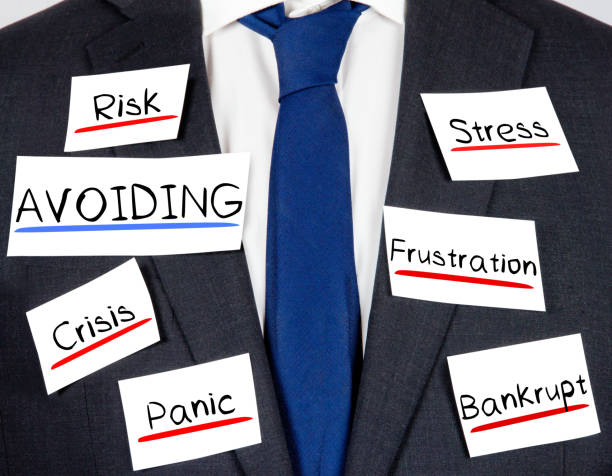
 Business suit Photo of business suit and tie with AVOIDING concept paper cards avoiding debt stock pictures, royalty-free photos & images 

I know this article’s title is about staying out of debt and avoiding bankruptcy, but how does one get into debt in the first place? While the question may seem complex, the answer is really very simple. All it takes is a few swipes of a credit card, that financing companies are more than happy to give to you, and there you are, in debt. And to make sure you get into debt, the credit card companies will make sure to raise your credit limit if you are not already in debt.

So, what are some tricks to staying out of debt before having to look at alternatives such as bankruptcy? Here are 5 suggestions I found in a Yahoo finance post that are straight forward, but sometimes we need to be reminded when we can’t see the forest because the trees are in the way. So, anyway, here we go.

First. Use cash, use cash, use cash. That is, always use cash. The above text serves as a good introduction. Using cash will make you think twice about your purchases. It forces you to think about how much you are spending, instead of simply handing over a credit card. It has the additional advantage of not having to worry about how to pay that credit card later. It makes it much more difficult to overspend, and give you an incentive to more closely budget your money.

Second. Track spending. This obviously goes along with budgeting, but when you track your spending, you can see where you money is going, and what spending habits may need to be adjusted. It is the unnecessary spending that can lead to debt.

Third. Spending Triggers: Avoid Them. Some people spend money on things based on outside pressures. These pressures include stress, relationships, having a good day or a bad day, social pressures, credit cards, boredom, social media pressure, addiction, etc. The next time you spend on something you do not NEED, pay attention to what is causing you to make the purchase; what is behind making this impulse purchase.

Forth. Saved Payment Information: Delete It. Making electronic purchases can, in some ways, be worse than using a credit card at the store. At the store, you are at least forced to retrieve your credit card and tap, swipe or insert it to use it. When you make an electronic purchase, all you have to do is click on a button to make a purchase if your payment and shipping information is stored on the device. This currently seems to be the ultimate in impulse spending.

Fifth. Set Goals. When you are focused on a goal concerning your financial stability, or the purchase of something you need (or not need), it will help you focus on how your money is allocated. You will spend more attention to purchases, and how the purchase is either helping or preventing you from obtaining your goal.

The above is not a comprehensive list of things you should do to keep you out of debt, but it is a great start. For further advice, if you can find a conservative bankruptcy attorney in your area, that is, one that puts bankruptcy as a last case alternative to handling debt, he or she should be able to give you some excellent advise toward helping you avoid the need to file bankruptcy, and can also give you advise on things to do, and to avoid, that will keep bankruptcy as an option should you find it necessary to go down that road.